30/04/2026
Soletanche Bachy Fondations Spéciales Takes Part in the Rehabilitation of a Dam in Occitanie
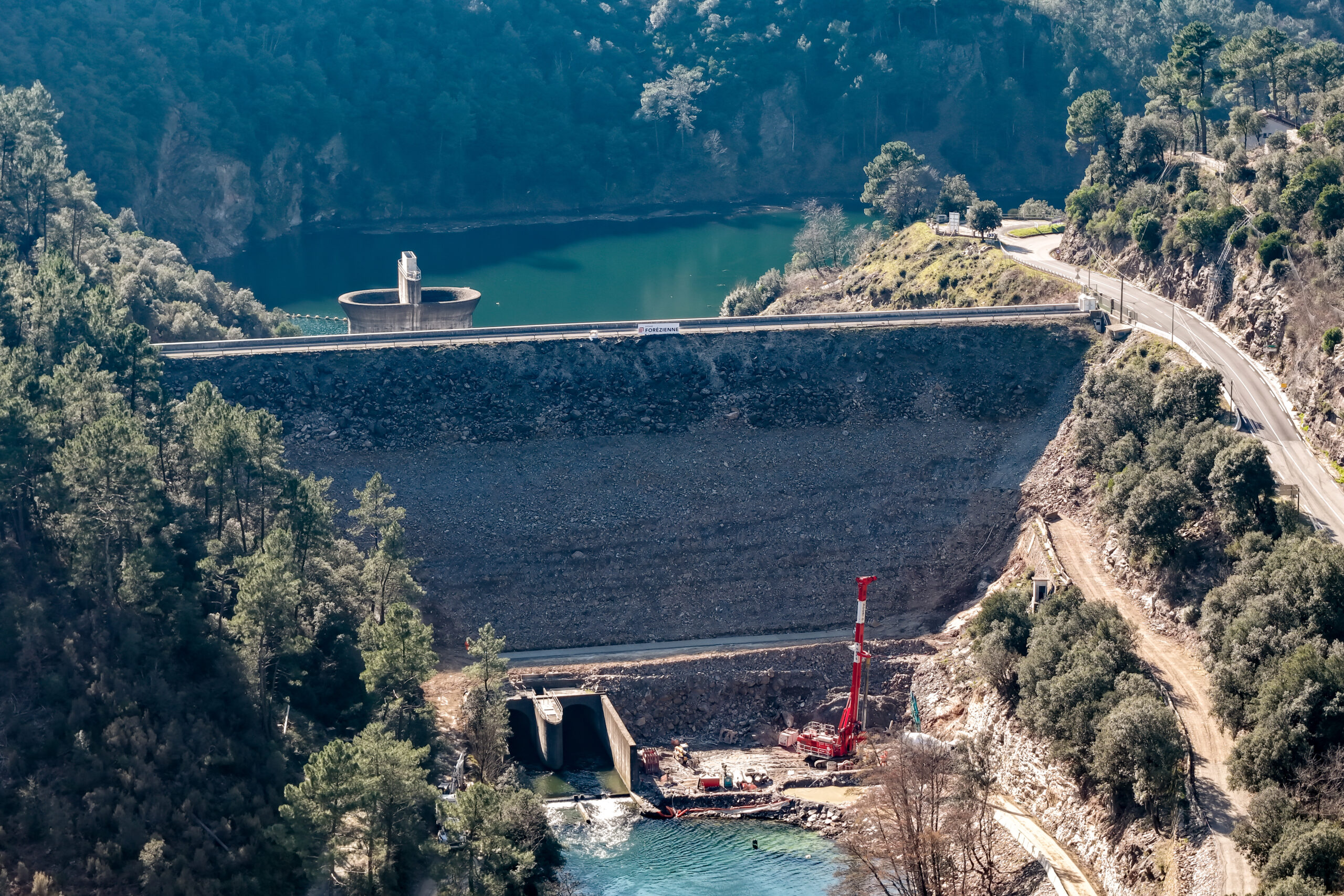
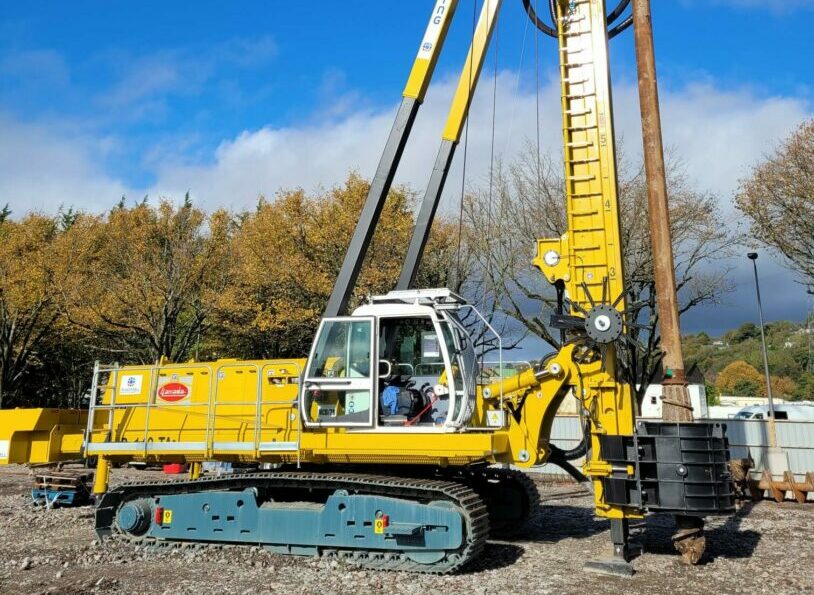
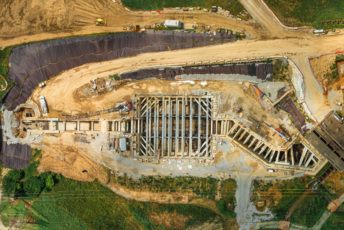
As part of the safety enhancement of the Sainte-Cécile-d’Andorge dam hydraulic complex, Soletanche Bachy Fondations Spéciales successfully carried out the construction of a secant pile wall under particularly demanding technical and environmental conditions. This project also marked the inaugural worksite for the MAIT BR-300 machine, which is now headed to Monaco for its next assignment.
Project Background and Challenges
In response to the hydro-climatic events that have hit the Cévennes region over the past twenty years, the authorities launched a safety improvement program for the Sainte-Cécile-d’Andorge dam. Within this framework, Soletanche Bachy Fondations Spéciales is working as a subcontractor for La Forézienne to construct a secant pile wall at the base of the existing structure.
This system addresses three major objectives:
- Ensuring the stability of the existing structures by creating a rigid and watertight barrier to limit seepage, with strict requirements concerning the overlap between piles.
- Strengthening sensitive and irregular areas where bedrock fracturing could compromise foundation stability in the event of downstream erosion caused by millennial to decamillennial floods.
- Facilitating the implementation of RCC (roller-compacted concrete), spillways, and ancillary structures by providing a self-supporting retaining system during the construction phase in the soft soils overlaying the bedrock.
Technical Resources Deployed
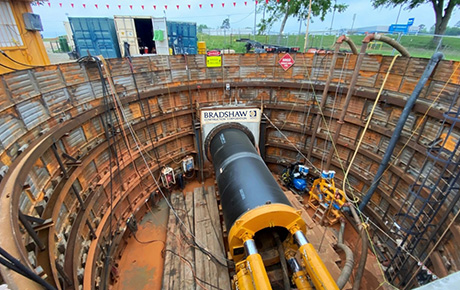
SBFS mobilized a MAIT BR-300 drilling rig to construct 44 secant piles with a diameter of 980 mm, anchored 4.00 m deep into a highly resistant gneissic bedrock. The use of recoverable interlocking casing ensured pile verticality and the watertightness of the wall—both essential conditions for enabling subsequent earthworks.
Significant Environmental Constraints
The close proximity of the Gardon d’Alès river required the implementation of strict environmental measures throughout the project:
- Installation of flexible watertight tarpaulins under combustion-engine machinery.
- Disposal of drilling slurry into a dedicated treatment basin.
- Continuous monitoring of the Gardon d’Alès water quality via sensors placed downstream of the site.