27/11/2025
Brady teams build a barge ramp in Cairns, Australia!
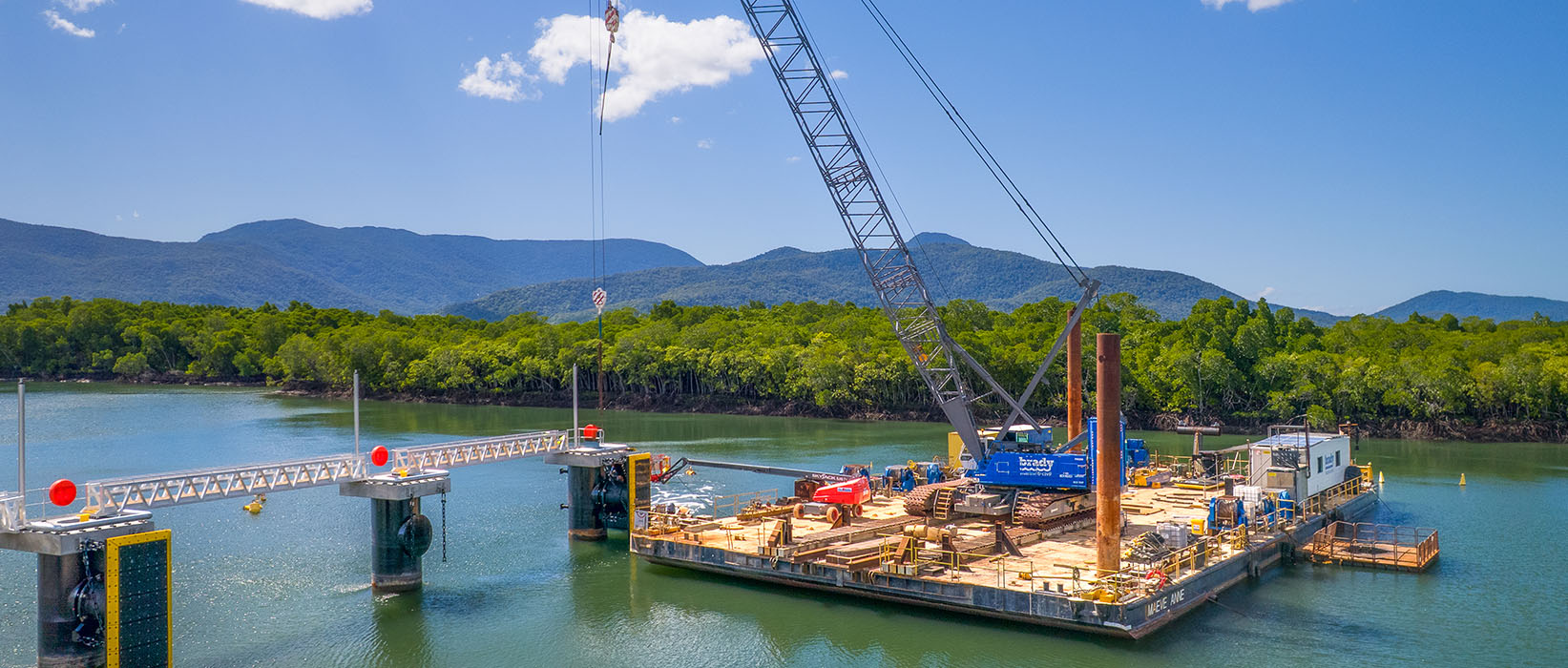
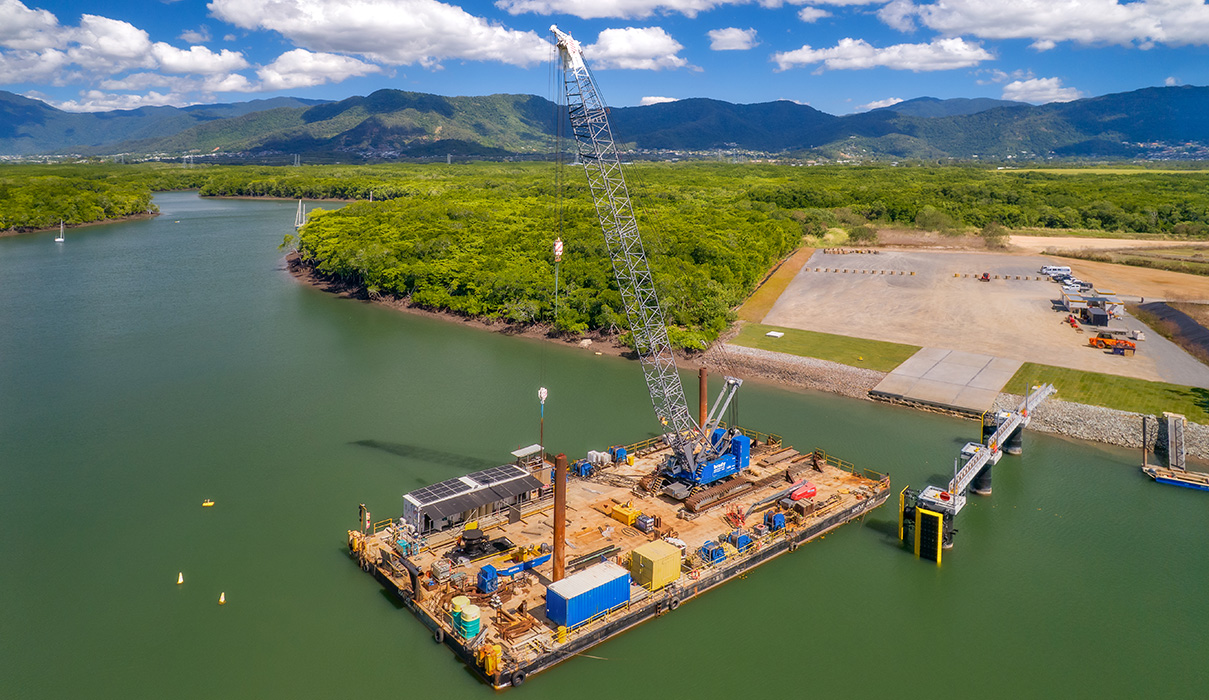
Brady Marine & Civil has been selected by the local Port Authority of Cairns, on the tropical coast of the Great Barrier Reef (northeast Australia), to deliver a barge ramp construction project. Brady’s teams implemented numerous actions to reduce the project’s carbon footprint.
Works completed
This construct-only contract covered a wide range of activities:
- Excavation near a waterway and backfilling
- Precast concrete works and in-situ concrete
- Installation of 2.1-metre diameter monopiles
- Marine dredging and rock revetment re-profiling
- Off-site steel fabrication
All works were self-performed by Brady, with equipment rented as required.
A decisive structural innovation
Brady’s pre-contract team introduced a major modification to the original design: replacing the inclined driven piles specified by the client with a solution based on vertical monopiles.
This innovation enabled:
• Reduction of material costs and embodied carbon emissions
• Prefabrication of pile heads, limiting the duration of in-water works
• Improved compatibility with construction equipment
Result: a faster, safer, and more sustainable project.
Project execution
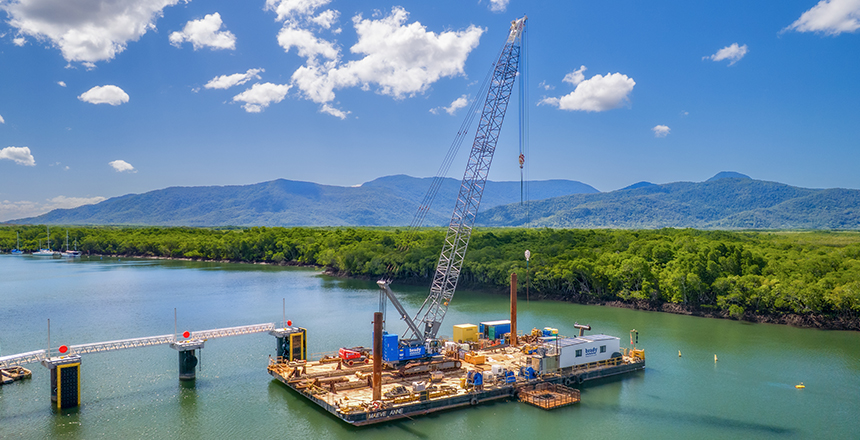
The 48-metre-long Maeve Anne barge was towed from Brisbane, fully loaded with three monopiles of 2.1 metres in diameter and over 30 metres long, as well as all necessary equipment.
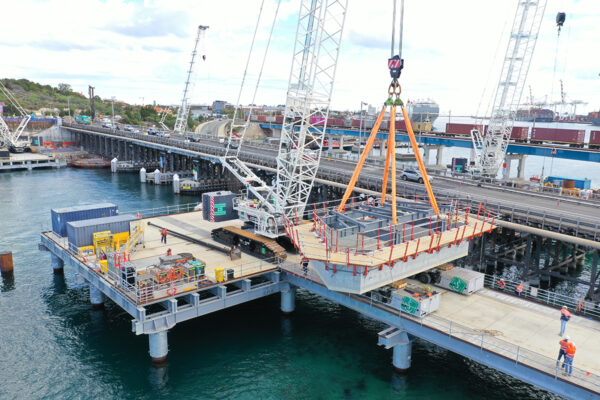
The three monopiles were installed using carefully planned lifts adapted to the capacity of both crane and barge.
The pile heads, prefabricated on site, were then lifted and welded into position, eliminating any concrete works above water.
The Maeve Anne also served as the floating platform for marine dredging: around 1,000 m³ of potentially acid sulfate sediments were removed and disposed of offsite.
The quay fenders and mooring equipment were also installed from the barge.
Despite dense reinforcement, a steep slope, and proximity to water, the team delivered a robust ramp that meets Brady’s standards.
The project took place on an undeveloped site adjacent to a protected fish habitat zone.
Several initiatives were implemented to reduce the carbon footprint:
• Hybrid generator to supply power to the site facilities (off-grid)
• Portable battery packs replacing small fuel generators for power tools
• Use of electric and hybrid vehicles charged offsite
Switching from inclined driven piles to monopiles resulted in an estimated reduction of 500 tonnes of CO₂ equivalent.
This project demonstrates Brady Marine & Civil’s ability to deliver technically demanding, safe, and environmentally responsible maritime structures, while optimizing cost and schedule performance.
Congratulations to all teams!